
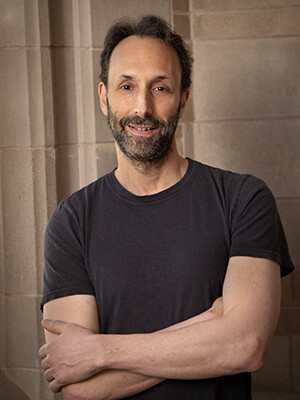



Mara Redlich Revkin
Fellow
Mara Redlich Revkin is a Ph.D. Candidate in Political Science at Yale University with a J.D. from Yale Law School. Her work aims to shed light on how legal systems operate in and are transformed by war using multi-method research designs that include field experiments, door-to-door surveys, interviews, and archival newspaper and social media data.
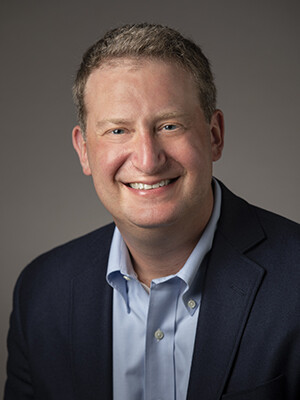
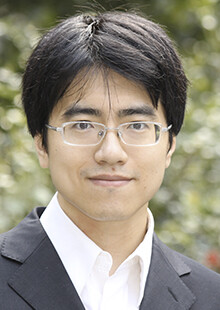
Edward (“Ted”) Wittenstein
Fellow
Edward (“Ted”) Wittenstein is Deputy Director for Leadership Programs and a Lecturer at Yale University’s Jackson School of Global Affairs, where he teaches undergraduate and graduate courses on intelligence, cybersecurity, and national security decision-making. In fall 2021, he will become Executive Director of International Security Studies, a major new research hub of the Jackson Institute dedicated to the study of international history, grand strategy, and global security. Ted also serves as Executive Director of Yale’s Johnson Center for the Study of American Diplomacy, a foreign policy studies program founded upon the donation of Dr. Henry Kissinger’s papers to Yale. Ted is a graduate of Yale College and Yale Law School. Prior to returning to work for Yale, he held a variety of positions at the U.S. Department of Defense, Commission on the Intelligence Capabilities of the United States Regarding Weapons of Mass Destruction, Office of the Director of National Intelligence, and the Department of State.

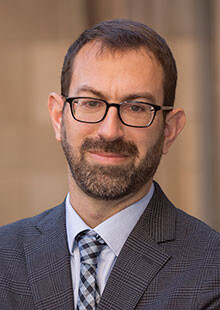
Stephen Wertheim
Fellow
Stephen Wertheim is a historian and analyst of U.S. foreign policy. He is Director of Grand Strategy at the Quincy Institute for Responsible Statecraft, a think-tank he co-founded in 2019 after holding faculty positions at Columbia University and Birkbeck, University of London.
He is author of Tomorrow, the World: The Birth of U.S. Global Supremacy (Harvard University Press, 2020). The book reveals how, in the lead-up to the attack on Pearl Harbor, American officials and intellectuals decided that the United States should henceforth seek military dominance across the globe. Wertheim has also published academic articles on ideas of U.S. foreign relations from the nineteenth century to the present, examining security policy, international law, world organization, and humanitarian intervention.
He regularly writes about current events in Foreign Affairs, the New York Review of Books, the New York Times, the Washington Post, and elsewhere. In 2020 Prospect magazine named him one of “the world’s 50 top thinkers for the Covid-19 age.”
He was previously a Research Scholar at the Saltzman Institute of War and Peace Studies9 at Columbia University and held postdoctoral fellowships at King’s College10, University of Cambridge, and Princeton University. He received a PhD in History from Columbia University in 2015 and an AB summa cum laude in History from Harvard University in 2007.